Other freshwater · Freshwater
White catfish
Ameiurus catus
Atlantic/Gulf-slope catfish of freshwater and brackish coastal systems; this record covers freshwater rivers, reservoirs, lakes, and slow tributaries only.
Also called white cat, white bullhead.
- Flowing water
- Stillwater
- Ordinary target
- 4 of 4 overlays reviewed
- Reviewed 2026-08-27
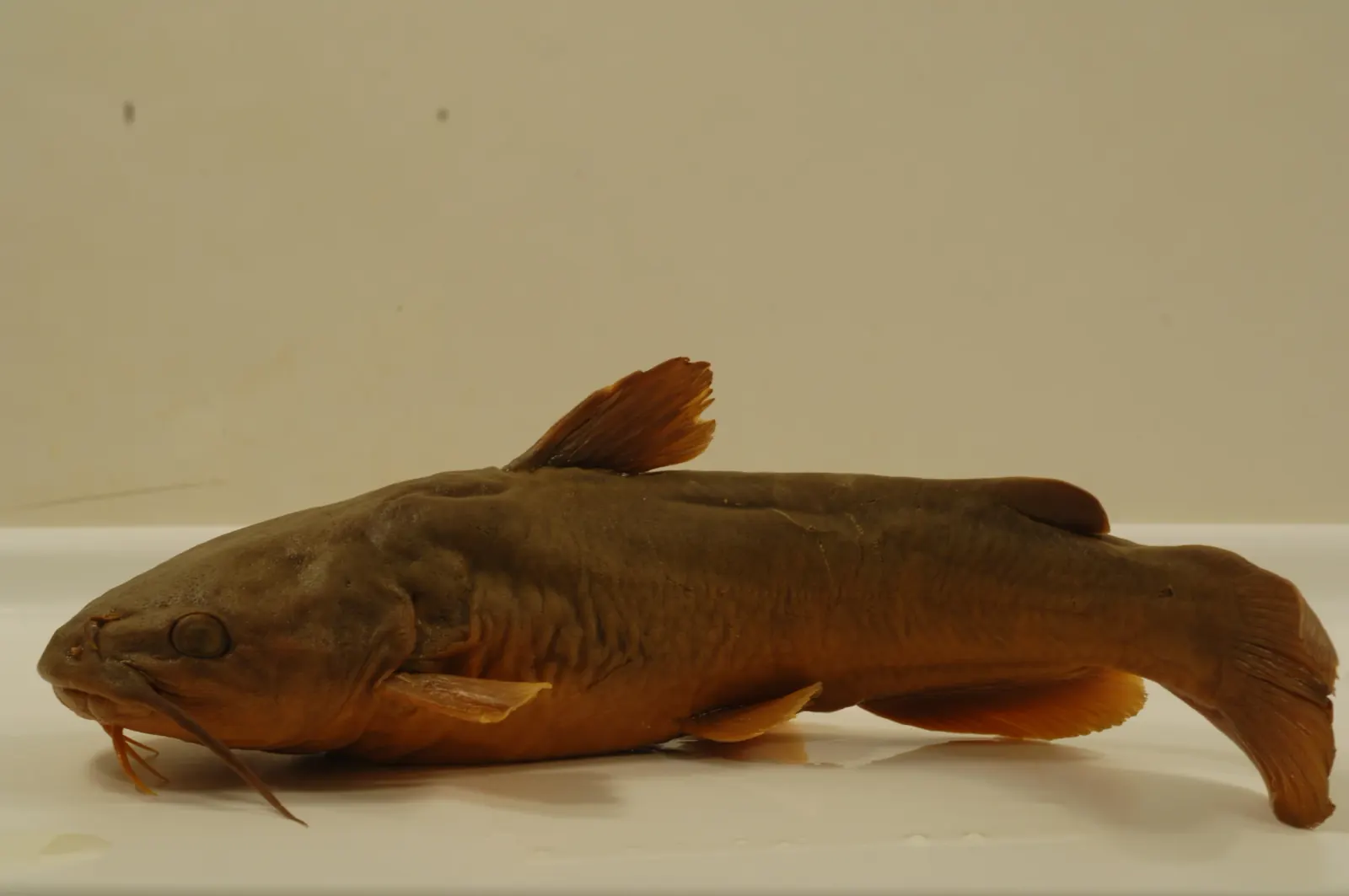
Photograph · reviewed 2026-08-27
4,288-pixel USFWS identification photograph with barbels, fins, flank and caudal profile clearly visible.
Matthew Patterson / USFWS · U.S. Fish and Wildlife Service · Public Domain — U.S. federal government work Source
Take this somewhere
This page is the record. The reading is what happens when you add water, a season and a temperature to it — that is where the families below get ranked against each other instead of just listed.
Those three links carry the fish and nothing else. No conditions were declared on this page, so none travel, and the link says so rather than sending an empty reading.
The half nobody publishes
What this record does not know
Everything else on this page comes from a named agency or peer-reviewed source. This is the other side of that: the questions a reviewer went looking for an answer to and came back without, and the fields the record leaves empty because filling them would mean guessing.
It is here rather than at the bottom because a page that only shows what it knows is easy to read as a page that knows everything. For White catfish there are 11 of them.
Named by a reviewer
9Somebody looked for this and wrote down that they did not find it.
- Behaviour
Nobody has sourced:
- species-specific angling-pressure response beyond general cover/light notes
- cold-front / barometric response with primary-source support
- water-level rise/fall response with primary-source support
- Identification
Nobody has sourced:
- a single continent-wide mean length
- exact spawn-temperature table with primary-source support
- Forage
Nobody has sourced:
- finer month-by-month diet inside a season, which is waterbody-specific
- complete regional forage-substitution table
- Season
Nobody has sourced:
- month-by-month location changes inside a season, which are waterbody-specific
- population-archetype calendars beyond the species-level overlay (see RPC)
Absent from the record
2No reviewer wrote a gap here. The field is simply empty, which is its own answer.
- Water temperature
No agency or peer-reviewed temperature band for White catfish was found that a review would accept. The reading runs without one rather than borrowing a number from a related fish.
- Population context
No regional population profile is registered. The species-level reading stands on its own; it does not silently become a local one.
Where the record puts it
Water and range
Flowing water
5 reviewed holding classes- Deep pool
- Current break
- Submerged wood
- Side channel
- Eddy
Stillwater
5 reviewed holding classes- Basin
- Wood
- Riprap
- Inlet
- Drop-off
DepthBottom-oriented from shallow cover to deeper holes and basins, with movement shallower to forage under favorable conditions.
Moving waterUses slow to moderate coastal-river and reservoir habitat; favors bottom structure and current relief over fast water.
LightMore willing to feed during daylight than many bullheads, while still using scent/taste and bottom contact heavily.
Thermal band
Temperature
No reviewed temperature band
Nobody publishes a preferred or active temperature range for White catfish that a review would accept. Borrowing one from a related fish would look like knowledge and behave like a guess, so the reading runs without it and says which parts of the answer that weakens.
How it uses water
Behaviour
Catalog exception: fresh/brackish tolerance is not a license to use this freshwater model in tidal saltwater without a reviewed salinity layer. Do not silently inherit brown/black/yellow bullhead night-only reasons.
Smithsonian NEMESIS: omnivorous — aquatic plants, benthic invertebrates, and small fishes. Chesapeake Bay Program: adults favor other fish but also consume crustaceans, insects, and aquatic plants. Larger-prey-fish is not a catalog class on this record.
Catalog: more willing to feed during daylight than many bullheads, while still using scent, taste, and bottom contact heavily.
Seasonal activityCatalog: late-spring to summer cavity or depression spawning around banks, roots, and structure. Exact spawn-temperature tables stay a gap.
Temperature-driven behaviourPreferred band roughly 68–80°F. Cold edge near 48°F; warm edge near 90°F. Slow to moderate coastal-river and reservoir water.
Depth movementBottom-oriented from shallow cover to deeper holes and basins, moving shallower to forage under favorable conditions.
Facing the currentConnecticut DEEP: backwaters and slow-moving areas of larger rivers and streams as well as lakes and ponds. Favors bottom structure and current relief over fast water.
ClarityScent and bottom contact work in stain. Bright open sand without structure is a poor default.
CoverDeep pools, current breaks, submerged wood, side channels, eddies, basins, riprap, inlets, and drop-offs.
Open waterNot a pelagic schooler.
Predator avoidanceWood, riprap, depth, and banks.
TerritoryBottom structure and current relief. Guarded nests are a reproductive state, not a recommendation to target cavities.
Spawning (conservation context)Cavity or depression spawning around banks, roots, and structure. Guarded nests are excluded from target guidance. Exact temperature and nest-density tables remain a gap.
Where the general rule stops
- Fresh/brackish tolerance is not a license to use this freshwater model in tidal saltwater without a reviewed salinity layer.
- White catfish should not silently inherit brown/black/yellow bullhead night-feeding reasons.
What it can eat
Forage
- Small forage fish
- Aquatic insects
- Crustaceans
- Mollusks
- Worms / annelids
Smithsonian NEMESIS: omnivorous — aquatic plants, benthic invertebrates, and small fishes. Chesapeake Bay Program: adults favor other fish but also consume crustaceans, insects, and aquatic plants. Larger-prey-fish is not a catalog class. Plant material is an agency note off this catalog list.
- Feeding style
- Opportunistic
- Feeding zone
- Benthic
Through the year
- Winter
- Slow bottom intercept of remaining invertebrates in holes and basins.
- Spring
- Insects, crustaceans, and small fish as water warms.
- Early summer
- Mixed benthic omnivory. Nesting overlap is conservation context.
- Summer
- Insects, crustaceans, mollusks, worms, and small forage fish around wood and current relief. Daylight feeding is more plausible than a bullhead night-only default.
- Fall
- Remaining invertebrates and small fish along structure.
By life stage
- Young of year
- Smithsonian NEMESIS: small invertebrates (amphipods, mysids, midge larvae in estuary notes). Freshwater young stay insect- and invertebrate-weighted.
- Juvenile
- Benthic invertebrates and small crustaceans.
- Adult
- Insects, crustaceans, mollusks, worms, and small forage fish. Not a blue-catfish piscivore.
Ontogenetic shiftSmall invertebrates to mixed benthic omnivory with some small fish.
SubstitutionsCoastal rivers substitute different invertebrates than inland ponds. Do not inherit a bullhead night-only diet or a channel-catfish carrion story wholesale.
Diet capacity is not proof that a hatch or prey event is occurring. Observed current forage still comes from a user observation or Hatch Match.
Through the year
Season
Winter
- Where they sit
- Basins, deep pools, and remaining wood and riprap.
- Feeding
- Slow bottom intercept of remaining invertebrates.
What that changesBottom contact, slow drag, and live / natural bait suspension. Flowing slack: stationary bait and bottom-contact drift.
Spring
- Where they sit
- Backwaters, side channels, wood, and current relief as water warms.
What that changesStationary bait, pulse / jig, and bottom-contact drift.
Early summer
- Where they sit
- Banks, roots, wood, and slow structure.
What that changesStationary bait and bottom contact off nesting structure, not on it.
What would count against it
- using nesting cavities as holding water
Cavity or depression spawning around banks, roots, and structure. Guarded nests are excluded from target guidance. Exact temperature tables remain a gap.
Summer
- Where they sit
- Connecticut DEEP: backwaters and slow-moving areas of larger rivers and streams, plus lakes and ponds.
- Temperature
- Preferred 68–80°F.
- Light
- More daylight-capable than many bullheads; still a bottom-contact fish.
What that changesBottom contact, slow drag, and live / natural bait suspension. Flowing slack: stationary bait, bottom-contact drift, and pulse / jig.
What would count against it
- treating white catfish as channel catfish
- inheriting a bullhead night-only default
Fall
- Where they sit
- Basins, wood, and remaining current relief as water cools.
What that changesBottom contact, slow drag, and stationary bait.
Spawning · Early summer, Summer
Late-spring/summer cavity or depression spawning around banks, roots, and structure; guarded nests are not target cues.
Recorded as conservation context. No spawning site, staging concentration or migration bottleneck is named anywhere in this catalog, because naming one is how a population gets fished out.
Telling it apart
Identification
What to look at
- Connecticut DEEP: tail fin forked; upper lobe may be slightly longer than the lower; lobes rounded rather than the pointed lobes of channel catfish. Virginia DWR: more emarginate (less forked) than blue catfish.
- Connecticut DEEP: anal fin shorter than channel catfish, 18–24 rays. Channel catfish 24–29; blue catfish 30 or more.
- Connecticut DEEP: chin barbels light. Chesapeake Bay Program: white chin with barbels. That is a bullhead-family mark, not a channel-catfish mark.
- Connecticut DEEP: head and mouth generally larger and wider than channel catfish; no black spots on young fish; outer edges of adult eyes often blue.
- Virginia DWR: in Virginia they typically do not exceed 15 in. They are an Ameiurus, not a small channel catfish and not a yellow bullhead.
- Average adult length
- Connecticut DEEP: commonly 8–17 in. Virginia DWR: in Virginia typically do not exceed 15 in.
- Common angling size
- 8–16 in in coastal rivers, reservoirs, and slow tributaries.
- Typical weight
- Usually well under 3 lb. They are not a blue-catfish weight class.
- Maximum documented
- Connecticut DEEP: state survey max 21.7 in; max reported size 37 in; listed world record 18.9 lb. Those maxima are not typical.
What it gets confused with
- Channel catfish
- Channel catfish are more slender, more deeply forked with pointed tail lobes, usually spotted when young, and have 24–29 anal rays. White catfish have a wider head, 18–24 anal rays, light chin barbels, and no juvenile spots.
- Yellow bullhead
- Yellow bullhead have white chin barbels like white catfish, but a square to slightly rounded, un-notched tail. White catfish have a moderately forked tail.
- Blue catfish
- Virginia DWR: blue catfish are deeply forked with a straight anal fin and a dorsal hump. White catfish are a small, rounded-head Ameiurus with a less forked tail.
- Brown bullhead
- Brown bullhead have dark chin barbels and a square to slightly notched tail. White catfish have light chin barbels and a moderate fork.
What follows from all of that
Presentation families
Flowing water
Stationary bait
Hold a scent or food form in one feeding station and wait for a fish to move to it.
- anchor the presentation
- keep bait in the pocket
- detect takes without sweeping
- refresh often
What it asks of the tackle
- Depth control
- High
- Sensitivity
- Moderate
- Casting distance
- Short
- Weight range
- 1/4–1 oz
- Cover resistance
- High
- Line visibility
- Moderate
- Retie frequency
- High
Bottom-contact drift
Tick or crawl a food form along the substrate through a feeding lane without snagging constantly.
- feel the bottom
- short hops
- reset after hang
- weight just enough
What it asks of the tackle
- Depth control
- High
- Sensitivity
- High
- Casting distance
- Moderate
- Weight range
- 1/8–3/8 oz
- Cover resistance
- Moderate
- Line visibility
- Low
- Retie frequency
- Moderate
Pulse / jig
Lift and drop a compact bait so it occupies a pocket, seam, or head without leaving the water column.
- short lift
- controlled drop
- stay in the pocket
- repeat on the same piece
What it asks of the tackle
- Depth control
- High
- Sensitivity
- High
- Casting distance
- Short to moderate
- Weight range
- 1/8–3/8 oz
- Cover resistance
- Moderate
- Line visibility
- Low
- Retie frequency
- High
Stillwater
Bottom contact
Keep a bait on or just above the substrate along a break, flat, or inside a weed edge.
- feel bottom
- drag or hop
- pause on the break
- stay in contact
What it asks of the tackle
- Depth control
- High
- Sensitivity
- High
- Casting distance
- Moderate
- Weight range
- 1/8–1/2 oz
- Cover resistance
- High
- Line visibility
- Low
- Retie frequency
- High
Slow drag
Move a bait along the bottom slowly enough that it stays in the feeding layer of inactive fish.
- continuous contact
- very slow travel
- pause at changes in bottom
- do not hop out of the zone
What it asks of the tackle
- Depth control
- High
- Sensitivity
- High
- Casting distance
- Moderate
- Weight range
- 1/8–3/8 oz
- Cover resistance
- Moderate
- Line visibility
- Low
- Retie frequency
- Moderate
Live / natural bait suspension
Present a natural food form with enough life or scent to hold in a station without looking mechanical.
- keep it alive or fresh
- match the holding depth
- minimize hardware bulk
- detect without pulling it away
What it asks of the tackle
- Depth control
- High
- Sensitivity
- High
- Casting distance
- Short to moderate
- Weight range
- As light as conditions allow
- Cover resistance
- Moderate
- Line visibility
- Low
- Retie frequency
- High
What moves them for this fish
Reviewed rules that push particular families up when the conditions match. Each one names the conditions it needs and why it exists, so you can disagree with it.
White catfish retain bottom/scent mechanics but do not require the strong nocturnal penalty used for some bullheads.
When
Deep pool, Current break, Submerged wood, Basin, Wood, Riprap, Drop-off
Moves up
Stationary bait, Bottom-contact drift, Bottom contact, Slow drag, Live / natural bait suspension
Reviewed 2026-08-27
Where every sentence came from
Sources
Agency
Connecticut DEEP white catfish account
Used for behaviour; season. Read 2026-08-30, next check 2026-11-17.
Agency
Chesapeake Bay Program white catfish field guide
Used for behaviour; season. Read 2026-08-30, next check 2026-11-17.
Agency
Virginia DWR white catfish comparison notes
Used for behaviour; season. Read 2026-08-30, next check 2026-11-17.
Agency
State wildlife agency White Catfish species accounts
Used for habitat, thermal band and presentation families. Read 2026-08-27, next check 2026-11-27.
Agency
Used for identification. Read 2026-08-30, next check 2026-12-06.
Agency
Used for identification. Read 2026-08-30, next check 2026-12-06.
Agency
Used for identification. Read 2026-08-30, next check 2026-12-06.
Agency
Smithsonian NEMESIS white catfish summary (broad head, omnivory, sluggish habitat)
Used for identification. Read 2026-08-30, next check 2026-12-06.
Agency
Smithsonian NEMESIS white catfish summary
Used for behaviour. Read 2026-08-30, next check 2026-11-17.
Agency
Smithsonian NEMESIS white catfish summary (omnivory: plants, benthic invertebrates, small fishes)
Used for forage. Read 2026-08-30, next check 2026-11-27.
Agency
Chesapeake Bay Program white catfish field guide (omnivory; adults favor fish plus crustaceans and insects)
Used for forage. Read 2026-08-30, next check 2026-11-27.
Agency
Connecticut DEEP white catfish account (slow-water habitat)
Used for forage. Read 2026-08-30, next check 2026-11-27.
A source with no link predates the rule that one has to carry a URL. It is still a real citation and still checkable; it just takes a search rather than a click, and that is worth knowing before you rely on it.