Other freshwater · Freshwater
White sucker
Catostomus commersonii
Widespread North American catostomid occupying an unusually broad range of cool/warm, clear/turbid, flowing/standing fresh waters.
Also called common sucker.
- Flowing water
- Stillwater
- Ordinary target
- 4 of 4 overlays reviewed
- Reviewed 2026-08-27
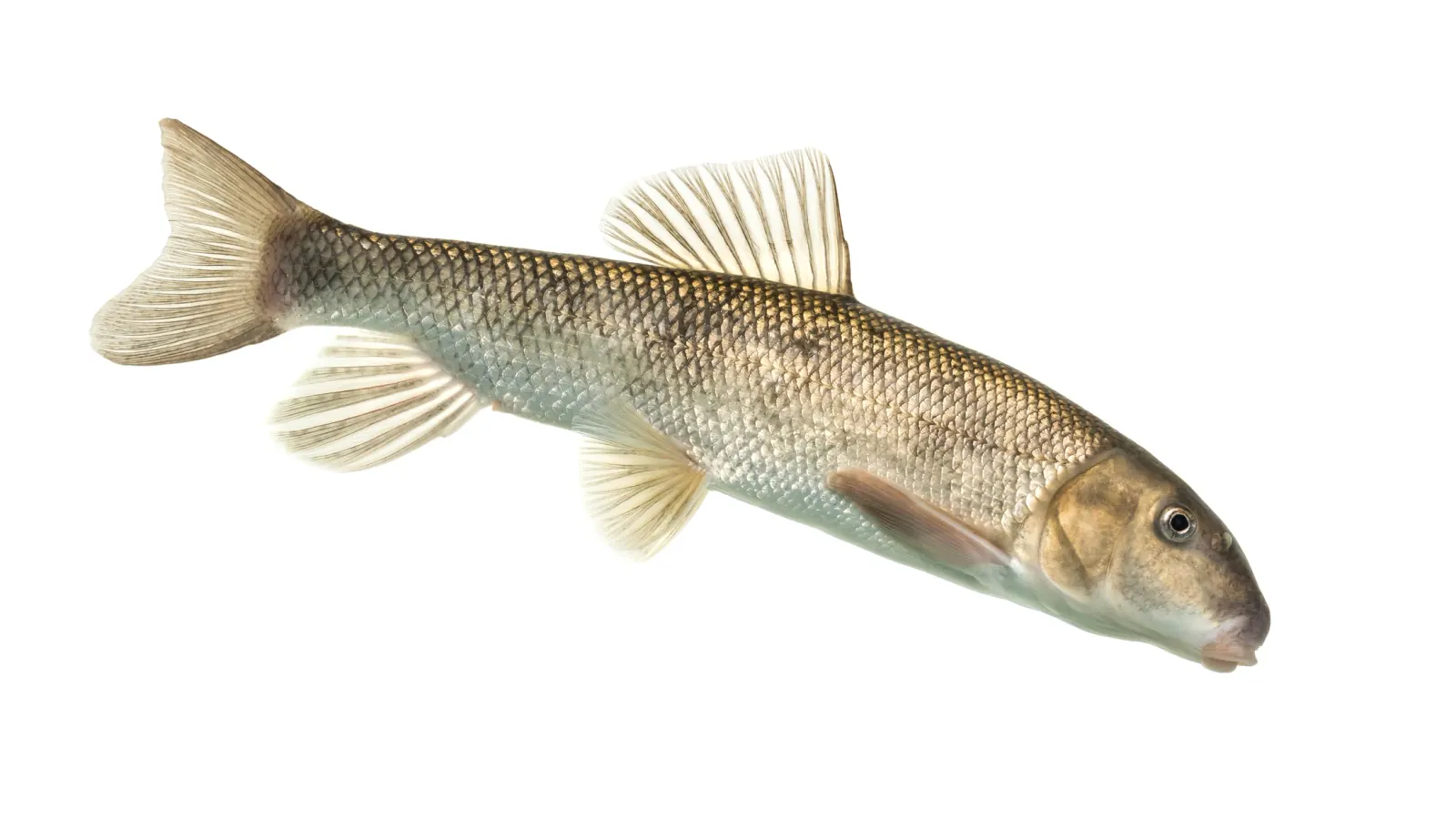
Photograph · reviewed 2026-08-27
High-resolution USFWS white sucker photograph with explicit species identity and clearly visible morphology.
Sam Stukel / USFWS · U.S. Fish and Wildlife Service Mountain-Prairie · Public Domain — U.S. federal government work Source
Take this somewhere
This page is the record. The reading is what happens when you add water, a season and a temperature to it — that is where the families below get ranked against each other instead of just listed.
Those three links carry the fish and nothing else. No conditions were declared on this page, so none travel, and the link says so rather than sending an empty reading.
The half nobody publishes
What this record does not know
Everything else on this page comes from a named agency or peer-reviewed source. This is the other side of that: the questions a reviewer went looking for an answer to and came back without, and the fields the record leaves empty because filling them would mean guessing.
It is here rather than at the bottom because a page that only shows what it knows is easy to read as a page that knows everything. For White sucker there are 21 of them.
Named by a reviewer
19Somebody looked for this and wrote down that they did not find it.
- Behaviour
Nobody has sourced:
- winter habitat and overwintering behaviour — no primary source reached describes it
- cold-front / barometric response
- water-level and flow-change response
- angling-pressure response
- predator avoidance and cover use beyond the general statement that this is a bottom-oriented fish
- territoriality and aggression — not described in any source reached
- the diel evidence is a laboratory study on activity phase plus one secondary habitat statement; no field telemetry was reached
- Identification
Nobody has sourced:
- regional / vernacular names — no agency source reached supplied a list
- regional colour variation
- the lateral-line scale count differs between agencies (55–80, 55–85, 60–75); the overlap with largescale sucker at the upper end was not resolved by a single authority
- a field character for separating white × longnose hybrids from either parent
- Forage
Nobody has sourced:
- the agency accounts also document snails and clams, algae and diatoms, detritus and fish eggs, none of which the catalog carries as forage classes for this species; the catalog classes have been kept and the discrepancy recorded rather than resolved
- young-of-year and juvenile diet — not described in the sources reviewed
- season-by-season diet shifts — not described in the sources reviewed
- prey-size shifts with growth
- Season
Nobody has sourced:
- winter entry omitted — no sourced description of overwintering habitat or activity
- depth tendency by season beyond the general lake figure
- stillwater seasonal structure, which the catalog carries and the agency accounts confirm occurs, but which none of them describes season by season
- riprap is carried in the catalog as still-water holding for this species but is not documented in any source reached
Absent from the record
2No reviewer wrote a gap here. The field is simply empty, which is its own answer.
- Water temperature
No agency or peer-reviewed temperature band for White sucker was found that a review would accept. The reading runs without one rather than borrowing a number from a related fish.
- Population context
No regional population profile is registered. The species-level reading stands on its own; it does not silently become a local one.
Where the record puts it
Water and range
Flowing water
5 reviewed holding classes- Pool tail
- Run
- Current break
- Deep pool
- Side channel
Stillwater
5 reviewed holding classes- Basin
- Drop-off
- Inlet
- Shallow flat
- Riprap
DepthPredominantly benthic from shallow flats to deeper basin/river pools depending on season and temperature.
Moving waterHighly adaptable but generally avoids the fastest current; bottom feeding is strongest in moderate/slow lanes and impoundments.
LightBottom-oriented sensory feeding makes light secondary to substrate, invertebrate availability, and current delivery.
Thermal band
Temperature
No reviewed temperature band
Nobody publishes a preferred or active temperature range for White sucker that a review would accept. Borrowing one from a related fish would look like knowledge and behave like a guess, so the reading runs without it and says which parts of the answer that weakens.
How it uses water
Behaviour
Illinois DNR describes white suckers swimming in schools near the bottom, and the species is the second most commonly collected fish across Iowa's monitored sites and among the most abundant fish of its size where it occurs — Connecticut calls it the majority of the fish biomass in many streams. Kavaliers' laboratory work, reviewed by Reebs, used shoals of 25 fish and found shoal size changed the activity phase, which is itself evidence of a socially structured fish. Spawning aggregations are conservation context and are not located here.
A bottom-vacuuming omnivore. The ventral, downward-facing mouth with thick fleshy lips carries taste buds used to sense food on the substrate (National Park Service); the Ontario database classes the species invertivore/detritivore, and Montana describes an omnivorous diet of detritus and insects taken with bottom organisms. Food is worked out of and off the substrate, not intercepted in the drift.
Genuinely plastic, and the sourcing is laboratory rather than field. Reebs' review reports Kavaliers' finding that individual white suckers held under a light/dark cycle were mostly night-active while groups of 25 were mostly light-active — activity phase shifted with shoal size. The UMass Climate Action Tool profile separately describes the species occupying shallow water at night to feed and retreating to cooler, deeper water in daylight. 'Mixed' is entered because both patterns are documented, not as a hedge.
Seasonal activityA spring spawning migration up tributary streams is the strongest seasonal signal in the agency accounts — Connecticut puts the runs at their most abundant from March to early May, Montana gives April through June, Minnesota April into early May. Autumn and winter activity is not resolved by the sources reviewed.
Temperature-driven behaviourA coolwater fish. The Ontario database gives a preferred range of 17–24 °C; the UMass Climate Action Tool gives an optimum of 15–25 °C, maximum growth and swimming performance near 24 °C, and an upper tolerance near 27.4 °C. The catalog's 55–68 °F band therefore sits at the cool end of the reported preferendum rather than at its centre, and the species' real constraint is the warm edge, not the cold one.
Depth movementThe Ontario database puts lake fish usually at 6–9 m. The Climate Action Tool describes a daily shallow-at-night, deeper-and-cooler-in-daylight pattern.
Facing the currentMontana states plainly that white sucker avoids rapid current, and reaches peak abundance in reservoirs. Illinois places it in creeks, small rivers and lakes. This is a slack-and-moderate-flow benthic fish, not a swift-riffle specialist.
ClarityBroadly tolerant. Iowa DNR assigns it intermediate pollution tolerance; the Ontario database calls it tolerant of pollution and moderately tolerant of turbidity; the National Park Service notes it persists from pristine to polluted water and across cold and warm conditions.
Spawning (conservation context)Spring spawner. Adults migrate upstream into tributaries and spawn over gravel or rocky shoals as an open-substratum, non-guarding spawner. Reported windows run March to early May (Connecticut), mid-April to May (Massachusetts), April to June (Montana). Spawning temperature is given as 10–20 °C (Ontario database). Fecundity runs from about 12,500 to 140,000 eggs, with over 100,000 possible from large females; incubation is 12–20 days at 50 °F, or 5–10 days in Minnesota's warmer account, and 18–20 days in Illinois'. Spawning substrate and any spawning-period concentration are excluded from target guidance.
Where the general rule stops
- White sucker and longnose sucker readily hybridize in some systems; identification should not be inferred from habitat alone.
- Adults also consume algae/detritus that the presentation-family vocabulary does not model as a forage class.
What it can eat
Forage
- Aquatic insects
- Worms / annelids
- Crustaceans
A bottom-working omnivore that senses food with taste buds in its fleshy lips and takes it off and out of the substrate. The University of Minnesota account names aquatic insect larvae, water fleas, amphipods, snails, clams, algae, other plant matter, detritus and fish eggs; Montana names aquatic invertebrates, diatoms, algae and organic debris; the Climate Action Tool profile names mayfly nymphs and chironomid larvae; Illinois summarises the diet as mainly insects. Capacity is not a current hatch.
- Feeding style
- Opportunistic
- Feeding zone
- Benthic
By life stage
- Adult
- Benthic invertivore and detritivore: midge and mayfly immatures and other aquatic insect larvae taken off and within the bottom, plus small crustaceans, worms and a substantial fraction of algae and organic debris.
Diet capacity is not proof that a hatch or prey event is occurring. Observed current forage still comes from a user observation or Hatch Match.
Through the year
Season
Spring
- Where they sit
- Run, pool tail and current-break water in tributary streams during the upstream migration; gravel and rocky shoals for spawning; shallow flats and inlet water in lakes.
- Movement
- Upstream migration into tributaries, at its most abundant March to early May in the south of the range and April to June farther north.
- Feeding
- Bottom-worked insect immatures and organic debris; feeding is a substrate activity, not a drift-interception activity.
- Temperature
- Spawning reported at 10–20 °C. Incubation runs 12–20 days at 50 °F.
What that changesBottom-contact drift and tight-line drift keep an offering on the substrate where this species actually feeds, and stationary bait is the other reviewed flowing family that matches a downward-facing benthic omnivore. In stillwater, bottom contact and slow drag. Surface and mid-column families do not match the mouth.
What would count against it
- treating the spring run as a location cue
- reading a spawning aggregation as holding water
Spring spawner. Spawning substrate and any spawning-period concentration are excluded from target guidance.
Summer
- Where they sit
- Deep pool, run and current-break water away from fast current in streams; basin, drop-off and shallow flats in lakes and reservoirs, where the species reaches peak abundance.
- Depth
- Lake fish usually at 6–9 m, with a shallower-at-night, deeper-in-daylight daily pattern reported.
- Temperature
- Preferred range reported at 17–24 °C with maximum growth near 24 °C and an upper tolerance near 27.4 °C. The catalog's 55–68 °F band sits at the cool end of that. The warm edge, not the cold one, is the constraint.
- Current
- Avoids rapid current; holds in slack and moderate flow and behind current breaks.
- Light
- Shallow-water use at night and deeper, cooler water in daylight is reported; laboratory work shows activity phase itself shifting with shoal size. This is a depth-and-phase statement, not a feeding-rate statement.
What that changesBottom-contact drift, tight-line drift and stationary bait in flowing water; bottom contact and slow drag in stillwater. The mechanics follow the mouth, not the season.
What would count against it
- fishing it as a mid-column or surface feeder
- forcing swift riffle water on a species the agency accounts say avoids rapid current
Fall
- Where they sit
- The same slack-to-moderate stream water and lake basins as summer; no autumn habitat shift is documented in the sources reviewed.
- Feeding
- Benthic invertivory and detritivory continue; no seasonal prey switch is described in the sources reviewed.
What that changesBottom-contact drift, tight-line drift and stationary bait in flowing water; bottom contact and slow drag in stillwater.
What would count against it
- importing a fall-spawning pattern from salmonids — this is a spring spawner
- assuming an autumn habitat shift the sources do not describe
Spawning · Early spring, Spring, Early summer
Spawns from April into June, often after upstream movement to gravel/rocky shoals. Spawning runs are excluded from target guidance.
Recorded as conservation context. No spawning site, staging concentration or migration bottleneck is named anywhere in this catalog, because naming one is how a population gets fished out.
Telling it apart
Identification
What to look at
- Body scales get progressively smaller from the tail toward the head. This gradient is the fastest cut against redhorse, whose scales are large and evenly sized front to back.
- Complete lateral line with a fine scale count: 55–80 (Connecticut DEEP), 55–85 (Iowa DNR), 60–75 (Montana). All of these sit well below the longnose sucker's count.
- Short dorsal fin of 11–13 rays (Montana) or 11–12 (Connecticut DEEP), on a short base.
- Lower lip is thick and fleshy, roughly twice the size of the upper lip, covered in small papillae, and carries a deep median notch.
- Snout short and rounded, projecting only slightly past the upper lip; the rear corner of the mouth does not reach, or only barely reaches, the nostrils.
- Cleft between the lower lips forms a narrow inverted 'V' (Peace River key).
- Young fish carry three or more irregular dark blotches along the side (Massachusetts).
- Average adult length
- 10–16 in (Iowa DNR); 12–20 in (National Park Service). Connecticut gives an overall adult span of roughly 6–18 in.
- Common angling size
- Most fish encountered run 12–18 in.
- Typical weight
- 1–2 lb (National Park Service); Iowa DNR gives up to 2 lb for typical adults, and the Ontario database 0.2–1.4 kg.
- Maximum documented
- To about 30 in / 760 mm (Massachusetts), with most adults under 24 in. The Ontario database gives a maximum of 64.0 cm and 4.11 kg; Minnesota's state record of 4.12 kg (9 lb 1 oz) is consistent with that ceiling.
- Longevity
- Commonly about 10–12 years (University of Minnesota); the Ontario database gives a lifespan span of 15–25 years. Males mature at 2–3 years and females at 3–4 (Ontario), or in the third or fourth year (Montana).
What it gets confused with
- Longnose sucker
- The single most important separation, and it is a scale count. Longnose carries more than 85 lateral-line scales; white sucker 55–85, and usually 60–75. Longnose has a long, pointed snout that noticeably overhangs the mouth, with the rear of the mouth reaching back beyond the nostrils; white sucker's snout is short and rounded and barely projects, with the mouth not reaching the nostrils. The cleft between the lower lips is deep in longnose (Massachusetts describes the lower lips as two square flaps) and a narrow inverted 'V' in white sucker. Note that the two hybridize — Montana documents white × longnose hybridization at several locations — so intermediate fish occur and not every specimen will key cleanly.
- Largescale sucker
- Range is usually the first cut: white sucker is native to Atlantic, Arctic, Great Lakes and Mississippi basins and USGS records its western introductions in the Colorado, Green, Rio Grande and San Juan drainages, not the Columbia basin, while largescale sucker is a Pacific-drainage fish. Where both occur — Montana carries white sucker in its eastern and northern drainages and largescale in the western ones — scale counts will not separate them, because largescale runs 62–80 against white sucker's 60–75. Use the dorsal fin instead: 13–15 rays on an elongated base in largescale, 11–13 on a short base in white sucker. The lip cleft also differs, a broad inverted 'V' in largescale against a narrow one in white sucker.
- Shorthead redhorse
- Shorthead redhorse has large, evenly sized scales over the whole body, plicate (folded) lower lips rather than papillose ones, and a red caudal fin. White sucker has fine scales that grade smaller toward the head, papillose lips with a deep median notch, and clear-to-dusky fins.
- Northern hog sucker (Hypentelium nigricans)
- Northern hog sucker has a large, square, bony head that is concave between the eyes, and usually four dark crossbars over the body. White sucker's head is rounded and not concave between the eyes, and adults carry no crossbars.
What follows from all of that
Presentation families
Flowing water
Bottom-contact drift
Tick or crawl a food form along the substrate through a feeding lane without snagging constantly.
- feel the bottom
- short hops
- reset after hang
- weight just enough
What it asks of the tackle
- Depth control
- High
- Sensitivity
- High
- Casting distance
- Moderate
- Weight range
- 1/8–3/8 oz
- Cover resistance
- Moderate
- Line visibility
- Low
- Retie frequency
- Moderate
Stationary bait
Hold a scent or food form in one feeding station and wait for a fish to move to it.
- anchor the presentation
- keep bait in the pocket
- detect takes without sweeping
- refresh often
What it asks of the tackle
- Depth control
- High
- Sensitivity
- Moderate
- Casting distance
- Short
- Weight range
- 1/4–1 oz
- Cover resistance
- High
- Line visibility
- Moderate
- Retie frequency
- High
Pulse / jig
Lift and drop a compact bait so it occupies a pocket, seam, or head without leaving the water column.
- short lift
- controlled drop
- stay in the pocket
- repeat on the same piece
What it asks of the tackle
- Depth control
- High
- Sensitivity
- High
- Casting distance
- Short to moderate
- Weight range
- 1/8–3/8 oz
- Cover resistance
- Moderate
- Line visibility
- Low
- Retie frequency
- High
Stillwater
Bottom contact
Keep a bait on or just above the substrate along a break, flat, or inside a weed edge.
- feel bottom
- drag or hop
- pause on the break
- stay in contact
What it asks of the tackle
- Depth control
- High
- Sensitivity
- High
- Casting distance
- Moderate
- Weight range
- 1/8–1/2 oz
- Cover resistance
- High
- Line visibility
- Low
- Retie frequency
- High
Slow drag
Move a bait along the bottom slowly enough that it stays in the feeding layer of inactive fish.
- continuous contact
- very slow travel
- pause at changes in bottom
- do not hop out of the zone
What it asks of the tackle
- Depth control
- High
- Sensitivity
- High
- Casting distance
- Moderate
- Weight range
- 1/8–3/8 oz
- Cover resistance
- Moderate
- Line visibility
- Low
- Retie frequency
- Moderate
Live / natural bait suspension
Present a natural food form with enough life or scent to hold in a station without looking mechanical.
- keep it alive or fresh
- match the holding depth
- minimize hardware bulk
- detect without pulling it away
What it asks of the tackle
- Depth control
- High
- Sensitivity
- High
- Casting distance
- Short to moderate
- Weight range
- As light as conditions allow
- Cover resistance
- Moderate
- Line visibility
- Low
- Retie frequency
- High
What moves them for this fish
Reviewed rules that push particular families up when the conditions match. Each one names the conditions it needs and why it exists, so you can disagree with it.
Observed benthic animal forage reinforces the white sucker's consistent substrate-feeding identity across otherwise broad habitat tolerance.
When
Aquatic insects, Worms / annelids, Crustaceans
Moves up
Bottom-contact drift, Stationary bait, Bottom contact, Slow drag, Live / natural bait suspension
Reviewed 2026-08-27
White sucker tolerate many environments but generally avoid the fastest current core; favor slower bottom delivery.
When
Flowing water · Pool tail, Current break, Deep pool, Side channel
Moves up
Bottom-contact drift, Stationary bait, Pulse / jig
Reviewed 2026-08-27
Where every sentence came from
Sources
Agency
Used for identification; behaviour; forage; season. Read 2026-08-30, next check 2026-12-07.
Agency
Illinois Department of Natural Resources — White Sucker species page
Used for identification; behaviour; forage; season. Read 2026-08-30, next check 2026-12-07.
Agency
Iowa Department of Natural Resources BioNet — White Sucker species overview
Used for identification; behaviour; forage; season. Read 2026-08-30, next check 2026-12-07.
Agency
Used for identification; behaviour; forage; season. Read 2026-08-30, next check 2026-12-07.
Agency
Minnesota Department of Natural Resources — White Sucker
Used for identification; behaviour; forage; season. Read 2026-08-30, next check 2026-12-07.
Agency
Connecticut DEEP — Freshwater Fishes of Connecticut: White Sucker
Used for identification; behaviour; season. Read 2026-08-30, next check 2026-12-07.
Agency
Montana Field Guide White Sucker species account
Used for habitat, thermal band and presentation families. Read 2026-08-27, next check 2026-11-27.
Agency
Massachusetts Division of Fisheries and Wildlife — White Sucker
Used for identification. Read 2026-08-30, next check 2026-12-07.
Agency
Used for identification. Read 2026-08-30, next check 2026-12-07.
Agency
Used for identification. Read 2026-08-30, next check 2026-12-07.
Peer reviewed
Used for behaviour; season. Read 2026-08-30, next check 2026-12-05.
Synthesis
Used for identification; behaviour; forage; season. Read 2026-08-30, next check 2026-12-07.
Synthesis
UMass Amherst Climate Action Tool — White Sucker thermal and habitat profile
Used for behaviour; forage; season. Read 2026-08-30, next check 2026-12-05.
Synthesis
Used for identification. Read 2026-08-30, next check 2026-12-07.
Synthesis
Used for identification. Read 2026-08-30, next check 2026-12-07.
A source with no link predates the rule that one has to carry a URL. It is still a real citation and still checkable; it just takes a search rather than a click, and that is worth knowing before you rely on it.